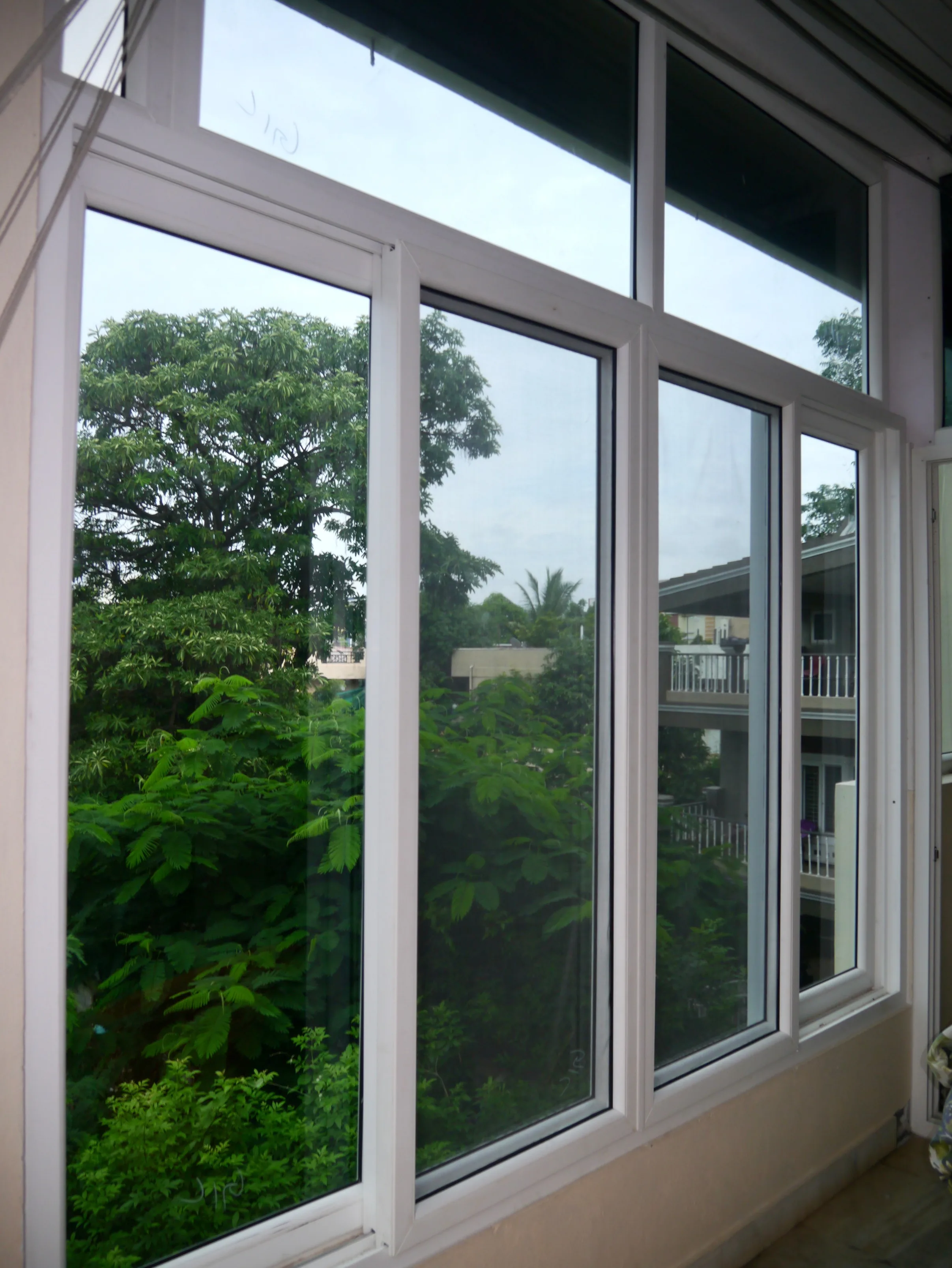
It starts the same way for most Hyderabad flat owners.
You are standing on your balcony on a Sunday morning. There is a layer of dust on the railing — again. A pigeon has found its way in — again. The traffic from the road below is loud enough that you gave up on the idea of sitting out here with your morning coffee months ago. And now your spouse has mentioned, for the third time this year, that the balcony would make a perfect home office if it were enclosed.
You open your phone and search “balcony closing Hyderabad.” Within ten minutes you are confused, overwhelmed, and not entirely sure if what you want to do is even legal.
This guide will answer every question you actually have — plainly, practically, and in the right order.
Why Are So Many Hyderabad Flat Owners Doing This Right Now?
Balcony enclosure has quietly become one of the most common home improvement decisions in Hyderabad's apartment complexes over the last few years, particularly in areas like Gachibowli, HITEC City, Kondapur, Manikonda, Banjara Hills, and Kukatpally.
The reasons are consistent across every inquiry we receive:
Dust. Hyderabad is one of India's dustiest cities, driven by perpetual infrastructure construction across the city and suburbs. An open balcony on a main road can accumulate visible dust within 24 hours. Families with young children, people with respiratory conditions, and anyone who has recently renovated their flat interior describe the dust as a constant, exhausting problem.
Pigeons. The open balcony is an invitation. Once pigeons establish a nesting spot, removal is difficult and the mess — droppings, feathers, nesting material — is considerable. Many residents spend more effort managing pigeons than they do actually using the balcony.
Noise. The Outer Ring Road and its feeder roads, the Metro construction corridors, the IT corridor traffic at 8 AM and 7 PM — Hyderabad's noise environment has changed significantly over the last decade. A Gachibowli resident near the ORR is dealing with a fundamentally different acoustic environment today than they were in 2015.
Usable space. A 3BHK in Kondapur with a 6×4 foot balcony has a decision to make: keep it as an occasionally-used outdoor area, or enclose it and gain a quiet work-from-home corner. Since 2020, the answer has increasingly been the latter.
The Question Everyone Asks First: Is It Legal?
This is the right question to ask, and the honest answer is: it depends on your society's bye-laws, not primarily on GHMC.
Here is how it actually works in practice:
GHMC's position. Technically, a balcony is classified as open space under the original building sanction. Converting it into enclosed, usable floor area is a structural alteration that falls outside the original approved plan. GHMC enforcement of balcony enclosures in existing residential apartments is, in practice, rare — but the legal risk exists, particularly for fully enclosed, opaque enclosures.
Your society's position. This is where the actual decision lives for most Hyderabad apartment dwellers. Most apartment Associations of Apartment Owners (AAO) or Residents' Welfare Associations (RWA) have bye-laws that govern modifications to individual flats. Some explicitly prohibit balcony enclosures. Many allow them with committee approval, provided the enclosure uses consistent materials and does not alter the external elevation appearance significantly. A few have no specific rule and leave it to individual discretion.
The practical distinction that matters most. There is a significant difference between a full opaque enclosure — brick or solid wall construction that permanently converts the balcony into a room — and a glazed fenestration system using sliding uPVC or glass panels that can, in principle, be opened or removed. Most societies and most enforcement authorities treat the latter as a more acceptable modification. It preserves the character of the balcony, maintains natural light and ventilation, and does not permanently alter the building's structure.
What to do before you start:
- Request a copy of your society's bye-laws from the management committee
- Submit a written application to the committee describing the enclosure type, materials, and dimensions
- Get written approval before work begins — verbal approval is worth nothing if your committee changes hands
- If your society has consistent enclosures already done by other residents, note the material and style — matching it is your strongest argument for approval
We have completed balcony enclosures in dozens of complexes across Hyderabad. The projects that go smoothly are invariably the ones where the resident obtained written committee approval beforehand. The projects that become complicated are the ones that didn't.
What Are the Options? uPVC vs Aluminium vs Glass Railing Systems
Once you have committee approval, the next decision is material. Three systems dominate the Hyderabad market:
uPVC Sliding Panels — The Most Popular Choice
A uPVC sliding window system fitted across the balcony opening is the most common enclosure in Hyderabad apartment complexes. Here is why:
It is the most cost-effective option for the performance it delivers. A uPVC 2-track or 3-track sliding system from a quality manufacturer starts at ₹350 per sq.ft — for a typical 6×8 foot balcony opening (48 sq.ft), that is around ₹16,800–20,000 for the window system before installation.
It is maintainable and reversible. If your society rules change, or if you move out and want to restore the original open balcony, uPVC sliding panels can be removed. Full brick enclosures cannot.
It performs well in Hyderabad's climate. uPVC does not rust, warp, or corrode in monsoon humidity. It does not conduct heat the way aluminium does — meaning your enclosed balcony does not become an oven in May. Multi-chamber uPVC profiles also provide meaningful sound reduction — relevant if you are enclosing the balcony specifically to create a quiet workspace.
It integrates mosquito mesh. A uPVC sliding system with built-in mesh means you can open the panels for ventilation without the pigeon and insect problem that made you close the balcony in the first place. This is a detail many people overlook until after they have installed a glass-only system.
Aluminium Frame Systems
Aluminium sliding or folding systems are often marketed as a premium alternative. The frames are thinner, which maximises glass area and gives a sleeker appearance. However, in Hyderabad's climate — particularly for west-facing balconies that receive direct afternoon sun — aluminium's thermal conductivity is a genuine drawback. The frame gets hot, the space heats up, and the energy efficiency advantage of enclosing the balcony is partially lost.
Aluminium also oxidises over time in the presence of Hyderabad's monsoon humidity and dust. It requires periodic maintenance that uPVC does not.
Full Glass Railing Systems
These are frameless or semi-frameless glass panel systems — popular in villa properties and premium apartment complexes in Banjara Hills, Jubilee Hills, and similar localities. They are the most expensive option, typically starting from ₹800–1,200 per sq.ft, and they prioritise aesthetics over enclosure. They do not fully close the balcony — they are more accurately described as safety glazing that still allows air and some sound through. If your goal is dust reduction, noise reduction, or a pigeon-proof workspace, this is not the right system.
How Much Does Balcony Closing Cost in Hyderabad?
Here is a straightforward breakdown based on a standard 3BHK apartment balcony — approximately 6 feet wide × 8 feet high (48 sq.ft opening):
| Option | Rate | Estimated Total (48 sq.ft) |
|---|---|---|
| uPVC 2-track sliding with clear glass | From ₹350/sq.ft | ₹16,800–22,000 |
| uPVC 3-track sliding with mesh + glass | From ₹420/sq.ft | ₹20,000–26,000 |
| uPVC with tinted or frosted glass | From ₹450/sq.ft | ₹21,600–28,000 |
| Aluminium sliding system | ₹600–900/sq.ft | ₹28,800–43,200 |
| Full frameless glass railing | ₹800–1,200/sq.ft | ₹38,400–57,600 |
Prices are indicative and vary by specific requirements, floor level, and site conditions. A free site visit and estimate will give you the exact number for your balcony.
What the Process Actually Looks Like
For residents who have not done this before, the timeline and process are often unclear. Here is what a typical Mason uPVC balcony enclosure project looks like from the first call to final installation:
Day 1 — Site visit and measurement. Our team visits, measures the balcony opening precisely, discusses your requirements (which direction the balcony faces, noise and dust concerns, whether you want mesh, glass type preference), and provides a written estimate on the same day.
Day 2–5 — Fabrication. Once you approve the estimate, fabrication begins at our Patancheru plant. All profiles are cut and assembled to your exact measurements. For a single balcony, fabrication typically takes 3–5 working days.
Installation day — Half a day's work. Installation of a single balcony enclosure typically takes 3–5 hours. Our team handles the full installation, sealing, and cleanup. You do not need to be away from home — the work is contained to the balcony and immediate area.
Post-installation. We do a full operational check of every panel and every latch before we leave. Any snagging points are addressed on the same day.
Three Things People Wish They Had Known Earlier
Think about the direction your balcony faces. A north-facing balcony in HITEC City is a comfortable workspace year-round. A west-facing balcony in Manikonda gets direct afternoon sun from 1 PM onwards — if you are enclosing it for a home office, consider a tinted glass option to manage heat and glare. We can advise on this during the site visit.
Decide on mesh before fabrication, not after. Many residents enclose the balcony with clear glass and no mesh, then six months later want the mesh added. It is a second project. If you want the option to open the panels for fresh air without pigeons and insects, specify mesh from the beginning.
The lowest quote is rarely the right one. Balcony enclosures attract a range of operators in Hyderabad, from established manufacturers to small fabricators working from a single workshop. The profile quality, the hardware grade, and the care of installation vary enormously. A panel that feels smooth and solid today but jams in the first monsoon — because the tracks were not properly levelled or the rollers are cheap — becomes a frustrating problem in a space you use every day. Ask to see samples of the profile and the hardware before you commit.
Ready to Close Your Balcony?
Mason uPVC has completed balcony enclosures across Gachibowli, HITEC City, Kondapur, Kukatpally, Banjara Hills, Manikonda, and dozens of other Hyderabad localities. We manufacture in-house at Patancheru, which means no middlemen, direct pricing, and full accountability for the product we install.
A site visit and estimate costs nothing and commits you to nothing. We will measure your balcony, discuss your options, and give you a written quote the same day.
Get your balcony enclosure estimate
Talk to Mason uPVC for a same-day site visit, written quote, and practical advice tailored to your Hyderabad apartment.