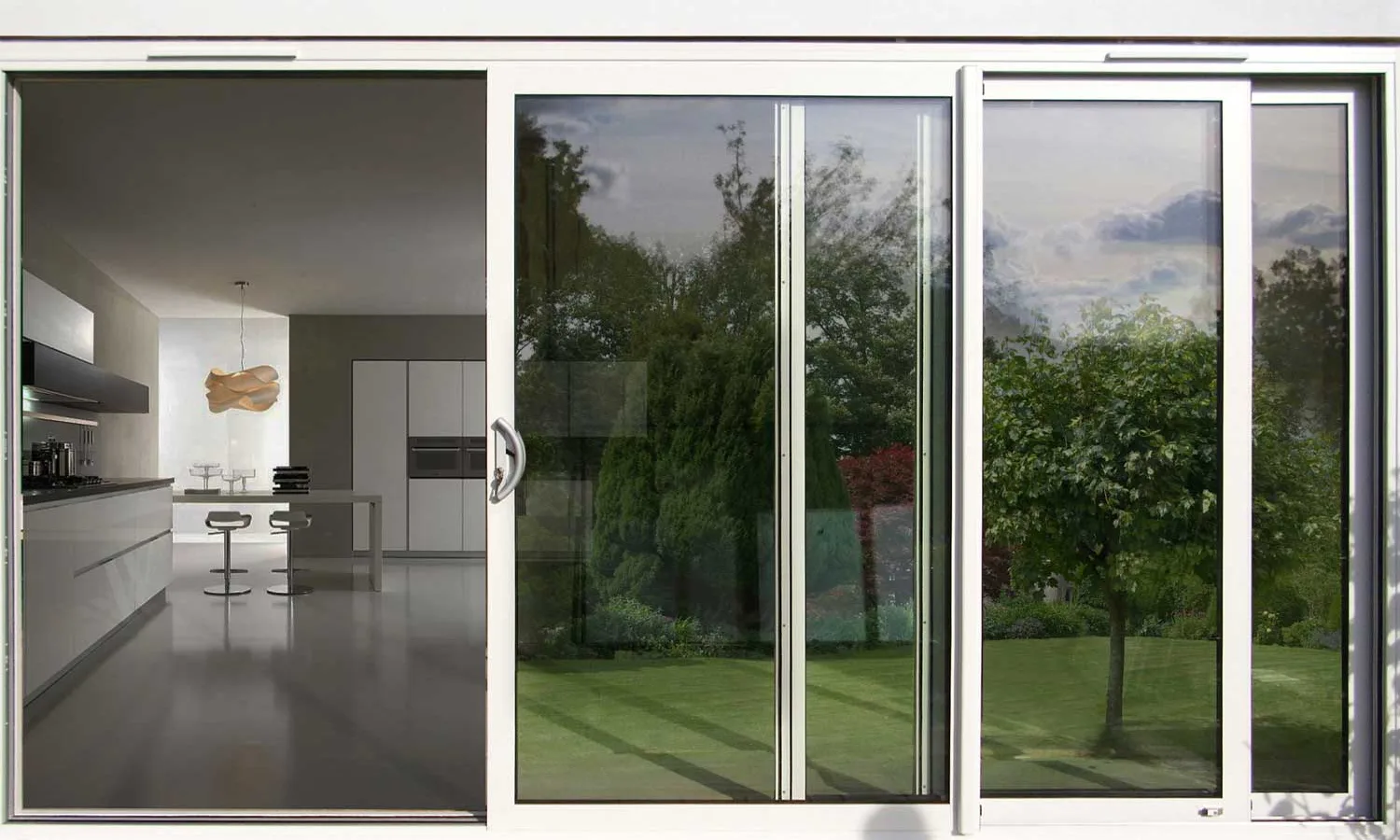
uPVC windows are the new normal. Yet for most homeowners in Hyderabad, the decision of which window to buy arrives in a rush — towards the tail end of construction, with the move-in date looming and the budget already stretched by surprises along the way. At Mason uPVC, one of the most common conversations our team has is explaining the different window types, their use cases, and how pricing actually works. This guide is written for exactly that moment.
The three window types you need to know
Windows come in many configurations, but most South Indian homes work with three primary types: sliding, casement, and fixed. Understanding each is the first step to making the right choice.
Sliding: the everyday workhorse
Sliding windows move left and right on tracks. The common variants are 2-track (2T), 2.5-track (2.5T), and 3-track (3T):
- 2-track (2T) — two glass panels in an outer frame, each sliding, giving a maximum 50% opening. The go-to for most standard openings between 3×3 ft and 5×5 ft.
- 2.5-track (2.5T) — adds an extra track for a mosquito-mesh panel alongside the two glass panels. Practical and popular across Hyderabad and Visakhapatnam where ventilation matters year-round.
- 3-track (3T) — reserved for very large openings, especially sliding doors beyond 6 ft. A third glass panel can extend the opening to 66%. For apertures where 2.5T would do, choosing 3T often comes down to aesthetics — its heavier sections simply look more substantial.
Casement: the aesthetically superior choice
If you care how your home looks, casement deserves serious consideration. Inspired by the traditional outward-opening wooden windows of Indian homes, the uPVC casement elevates that classic look with modern precision, weatherproofing, and longevity.
They are more expensive than sliding — sometimes by 50% or more. The reason is simple: casement requires more hardware. Every hinge, every multi-point handle, every mechanism that lets the sash swing without sagging adds cost. But the reward is a window that opens nearly 100% of its aperture, versus the 50% maximum of a sliding window. A top-hung casement is worth knowing about for smaller openings — it opens outward from the top, ventilating while keeping rain out, ideal for bathrooms and compact spaces.
Fixed: façade first
Fixed windows don't open. Their purpose is visual — they bring light in, frame a view, and shape the exterior of a building. Because they need minimal hardware, they're also the most affordable type. Combinations — a fixed panel flanking a sliding unit, or a casement beside a fixed light — are common and often the most elegant way to get both function and beauty.
Why can't a fabricator just give you one price?
This is one of the most frequent questions we hear. The answer comes down to material consumption per square foot — and it's less intuitive than it sounds.
So the price per square foot of a small fixed window can actually exceed that of a large sliding window, even though sliding profiles cost more per linear foot. Add hardware, glass specification, mesh, and installation complexity, and it's clear why a single quoted rate is rarely meaningful until your actual openings are measured.
A quick reference before you decide
- Standard room windows (3×3 to 5×5 ft) — 2T or 2.5T sliding. Functional, economical, widely available.
- Living-room or bedroom focal windows — casement, if the budget allows. The opening quality and visual presence are hard to match.
- Large sliding doors (6 ft+ widths) — 3T sliding, with or without a third glass panel depending on the look you want.
- Façade panels and stairwell lights — fixed. Clean, cost-effective, low-maintenance.
Ready to choose your windows?
Our team across Hyderabad and Visakhapatnam will measure your openings and walk you through the options — no pressure, no single-price guesswork.